
05 Ott La Berklee Library acquisisce “Beyond Notes” – Berklee Library acquires “Beyond Notes”
The English version is available after the Italian article.
PRESS & MEDIA / RASSEGNA STAMPA
La notizia dell’acquisizione di Beyond Notes da parte della Stan Getz Library del Berklee College of Music è stata ripresa anche da:
The acquisition of Beyond Notes by the Stan Getz Library at Berklee College of Music has also been featured by:
ColonneSonore.net
Non Solo Prog

Una nuova avventura internazionale per una ricerca sulla Musica, sulla Creatività e sui Processi Formativi.
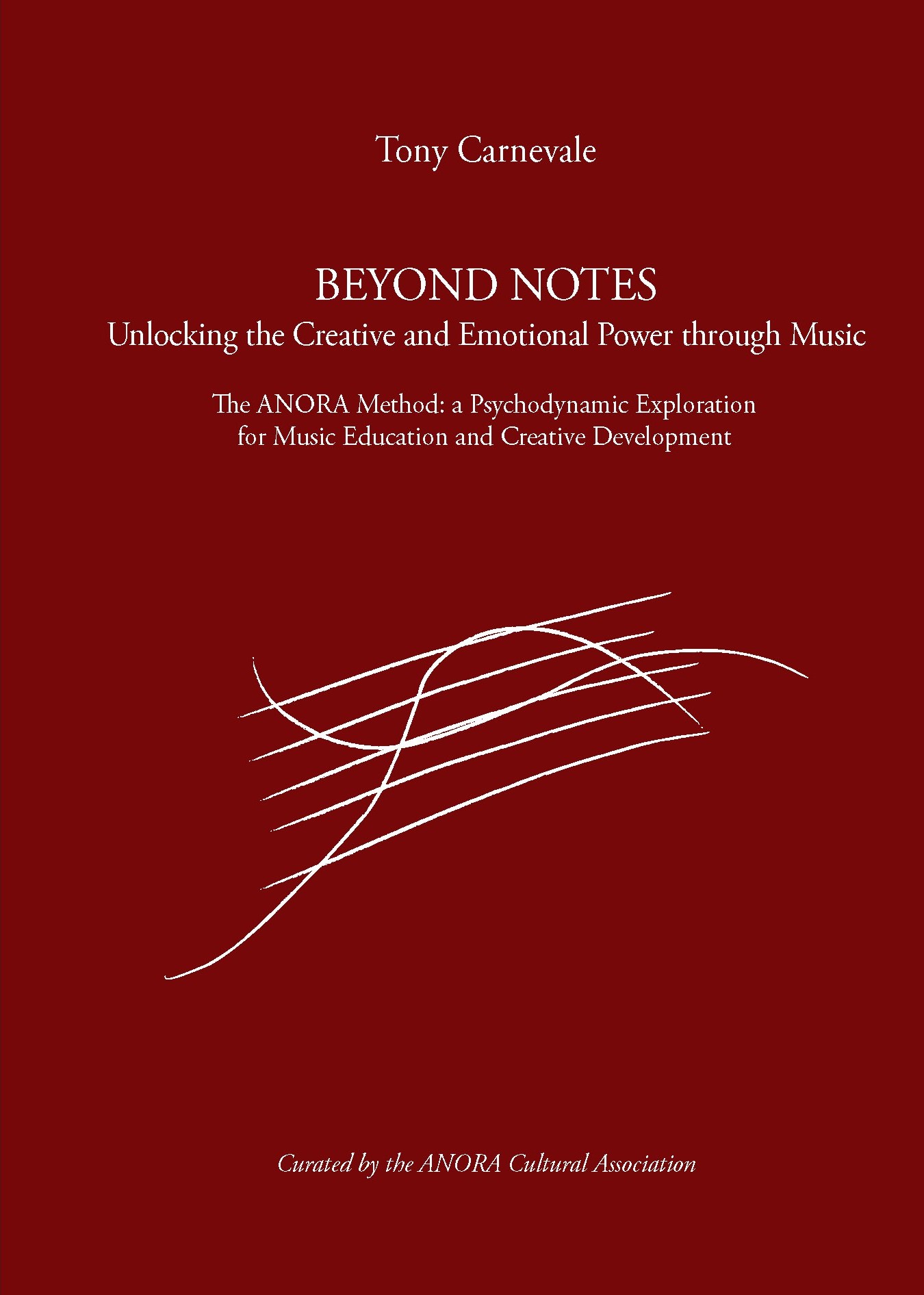
Beyond Notes: Unlocking the Creative and Emotional Power Through Music, con il sottotitolo The ANORA Method: Psychodynamic Exploration for Music Education and Creative Development, è stato ufficialmente catalogato nella Stan Getz Library del Berklee College of Music di Boston.
La presenza di questo libro nella biblioteca di Berklee rappresenta un passaggio importante nel percorso internazionale di una ricerca che nasce in Italia molti anni fa e che, attraverso pubblicazioni, attività formative e divulgative, ha progressivamente fatto emergere, oltre alle innumerevoli altre, una domanda particolare: che cosa succede nell’essere umano prima che il movimento del pensiero non cosciente e l’esperienza psichica ad esso legata diventi suono, nota, forma, composizione, improvvisazione, interpretazione ed eventualmente produzione?
Da questa domanda si è messa in movimento una ricerca che ha portato a Beyond Notes, che oggi entra a far parte di una collezione accademica internazionale dedicata alla musica e diventa disponibile per essere letto, studiato, confrontato, discusso e criticato all’interno di uno dei contesti musicali più conosciuti e considerati al mondo.
Particolarmente significativi, rispetto ai contenuti del volume, sono anche i Subject Headings con i quali il libro è stato indicizzato nel catalogo:
Music – Psychological aspects
Music – Instruction and study
(clicca QUI per entrare nella pagina dedicata della Berklee Library)
Due indicazioni bibliografiche che intercettano aspetti centrali della ricerca sviluppata nel libro: la dimensione psicologica e psicodinamica dell’esperienza musicale e quella relativa alla formazione, all’apprendimento e allo sviluppo della persona attraverso la musica.
Una Ricerca Che Viene Da Lontano
Il percorso comincia intorno al 1985, con alcuni miei articoli dedicati alla reazione umana al suono, pubblicati su una rivista di psichiatria, ai quali fecero seguito nel tempo altri articoli, interviste e contributi attraverso i quali la ricerca iniziale cominciò progressivamente ad ampliarsi.
Un passaggio importante avvenne nel 2003, con un articolo pubblicato sulla rivista di psichiatria Il sogno della farfalla: dalla domanda sulla reazione dell’essere umano al suono, la ricerca portava inevitabilmente verso una questione ancora più radicale: che cos’è la musica?
Una domanda apparentemente elementare che andava oltre la definizione della musica come semplice organizzazione di suoni o sistema codificato di azioni: che cosa rappresenta la musica per l’essere umano? Da dove nasce un’idea musicale? Quale filo lega percezione, reazione emotiva, immaginazione ed espressione? Perché un’esperienza interna dell’essere umano cerca una propria rappresentazione attraverso il suono?
Cominciava così ad emergere sempre più chiaramente una dimensione antropologica della ricerca: la musica considerata come esperienza psichica, espressiva e rappresentativa dell’essere umano.
Queste domande non sono però nate da un’osservazione teorica esterna al fare musica, ma si sono invece sviluppate parallelamente alla mia esperienza di ascoltatore, studente di musica, musicista e artista professionista, compositore, ricercatore e formatore, che continua ancora oggi.
La riflessione sui processi creativi si confronta quindi continuamente con l’esperienza diretta del creare e rappresentare, con il momento in cui un’idea ancora indefinita comincia a trasformarsi in esigenza espressiva per poi assumere una forma, con le difficoltà che incontra, con le trasformazioni che subisce e con gli strumenti tecnici che diventano necessari per poterla realizzare.
Dalla Ricerca Alla Pratica Dei Laboratori
Nel 2000, presso il Conservatorio Licinio Refice di Frosinone, iniziarono le prime esperienze laboratoriali attraverso le quali questi interrogativi poterono essere affrontati direttamente nella pratica formativa, ed è importante, anche storicamente, fare una distinzione: nel 2000 il Metodo ANORA (Approccio NOn RAzionale), come formulazione compiuta e come metodo denominato in questo modo, non esisteva ancora, ma erano già presenti diversi princìpi che sarebbero successivamente diventati Metodo.
Proprio il confronto diretto con le persone, con i loro processi ideativi e creativi, con le difficoltà, le resistenze, le immagini e le possibilità espressive che emergevano durante il lavoro laboratoriale ha consentito a quei principi di essere progressivamente verificati, modificati, approfonditi e organizzati.
I laboratori hanno assunto denominazioni differenti nel corso degli anni; ciò che li collega non è quindi un nome rimasto immutato, ma la continuità di una ricerca e di una pratica formativa che si sono evolute nel tempo: oggi, infatti, questa linea prosegue presso lo stesso Conservatorio Licinio Refice attraverso il Laboratorio di Direzione Artistica della Produzione Musicale.
Un Percorso Di Ricerca E Di Interlocuzione Istituzionale
Nel corso degli anni questa esperienza ha incontrato anche differenti forme di attenzione e sostegno istituzionale: infatti, nel 2005 i laboratori hanno ottenuto il patrocinio della SIAE e sono stati sostenuti per diversi anni con il contributo dell’IMAIE.
In anni più recenti il Metodo ANORA è stato inoltre oggetto di un webinar organizzato da INDIRE, con la partecipazione del Ministero dell’Istruzione e del Merito, nel quale sono stato intervistato da Annalisa Spadolini, Presidente del Comitato nazionale per l’apprendimento pratico della musica per tutti gli studenti, sui principi e sulle prospettive del Metodo: nel commento conclusivo, la stessa Spadolini auspicava che una metodologia di questo tipo potesse trovare applicazione anche a livello istituzionale.
Sono passaggi diversi tra loro, che non costituiscono naturalmente un’unica forma di riconoscimento, ma documentano nel tempo occasioni concrete di confronto tra questa ricerca e differenti realtà della formazione e della cultura musicale.
Dai Laboratori Ai Libri
A partire dal 2010, la ricerca ha trovato un’ulteriore forma di elaborazione e sistematizzazione attraverso una serie di pubblicazioni: Il pensiero e il suono (2010) ha raccolto e sviluppato alcuni dei nuclei emersi negli anni precedenti; nel 2014 è seguito Il suono ritrovato, successivamente pubblicato in altre tre edizioni; sono arrivati poi Poetica, Ricerca e Formazione Musicale (2019), Formazione Musicale Psicodinamica (2020) e Oltre le note – Un approccio non razionale alla musica (2022).
Beyond Notes affonda esplicitamente le proprie radici in quest’ultimo, ma non si limita a trasferirne il contenuto in un’altra lingua: ne sviluppa ulteriormente la ricerca, inserendola in una prospettiva capace di dialogare con un pubblico internazionale e portando in primo piano, già nel sottotitolo, due dei concetti centrali: Psychodynamic Exploration e Creative Development.
Prima Delle Note
Il titolo Beyond Notes potrebbe far pensare soprattutto a qualcosa che si trovi “oltre” le note, ma una parte fondamentale della ricerca riguarda, in realtà, ciò che viene prima delle note: non si tratta, quindi, di negare la tecnica, la conoscenza o il linguaggio musicale, ma di interrogarsi su ciò che li rende necessari.
Prima della nota composta, scritta, suonata o cantata deve potersi formare un’idea/immagine, un’esigenza espressiva, qualcosa che possa poi essere trasformato in una forma musicale; è proprio in questa dimensione che entrano in gioco creatività, fantasia, immagini, emozioni e capacità espressive e rappresentative della persona.
La tecnica acquista allora il suo significato più profondo: diventa, cioè, una necessità legata a un’esigenza espressiva, lo strumento attraverso il quale ciò che nasce dall’esperienza umana può essere organizzato, rappresentato e trasformato in forma artistica.
Possiamo immaginare questo processo come una continuità:
esperienza umana → reazione e formazione dell’idea/immagine → esigenza espressiva → trasformazione in idea musicale/suono → organizzazione musicale → competenze tecniche → forma artistica.
La tecnica rimane, quindi, qualcosa di non eludibile. Cambia però il punto dal quale la osserviamo, soprattutto in questo momento storico nel quale non possiamo evitare una integrazione dell’intelligenza artificiale come strumento di supporto nei percorsi formativi: non più soltanto qualcosa da acquisire preventivamente e accumulare come conoscenza astratta, ma anche uno strumento che diventa necessario nel momento in cui esiste qualcosa che chiede di essere espresso in modo coerente e adeguato.
Ideazione E Composizione
Da questa prospettiva nasce uno dei problemi centrali affrontati dal Metodo ANORA: quello dell’ideazione.
Nella formazione musicale, infatti, impariamo a scrivere, eseguire, interpretare, analizzare e organizzare il materiale musicale, ma esiste un momento precedente, quello nel quale qualcosa deve ancora essere “pensato”.
Nel Metodo ANORA l’ideazione viene assunta esplicitamente come oggetto autonomo del processo formativo, distinto ma connesso alla successiva elaborazione compositiva e tecnica.
Questo conduce a una domanda che considero sempre più importante:
Quando si insegna a comporre, si sta formando il processo creativo oppure si insegna a organizzare tecnicamente il risultato di un processo creativo che si presume già esistente?
La domanda non intende contrapporre ANORA all’insegnamento della composizione, né mettere in discussione il valore del lavoro svolto dai docenti della materia: un esercizio di composizione può infatti sollecitare implicitamente processi creativi senza per questo costituire di per sè una formazione specifica dei processi ideativi.
E la distinzione è importante: significa domandarsi se la capacità di creare idee/immagini, intenzioni più o meno coscienti, necessità espressive, debba essere semplicemente presupposta oppure possa diventare essa stessa oggetto di attenzione formativa.
La Ricerca Dell’Identità Artistica Originale
Il lavoro sui processi creativi ha progressivamente posto al centro un altro tema fondamentale: la ricerca, la formazione e lo sviluppo dell’identità artistica originale.
L’obiettivo non è trasmettere un modello o indicare alla persona che cosa debba creare ma, al contrario, il problema è costruire le condizioni perché possa riconoscere ciò che le appartiene, sviluppare una propria intenzione espressiva e trovare gli strumenti necessari per darle forma, con il supporto del formatore e del gruppo creativo che si forma, conseguentemente alla metodologia ANORA, all’interno dei laboratori.
Da questo punto di vista, il Metodo ANORA non vuole formare persone che creino secondo un modello e, tanto meno, persone che creino come il suo autore; la mia esperienza personale sui processi creativi rappresenta inevitabilmente una delle origini della ricerca, ma il passaggio decisivo consiste proprio nell’uscire dall’esperienza personale per entrare in risonanza con le idee/immagini dei partecipanti ai laboratori.
Non si tratta, cioè, di mostrare agli altri come sono riuscito io a creare, o sovrapporre il mio pensiero creativo a quello di qualcun altro, ma di cercare di comprendere quali condizioni possano permettere a un’altra persona di trovare la propria possibilità creativa, anche quando pensa di non possederla; è questa differenza a rendere centrale la questione dell’identità artistica: non invitare a riprodurre o imitare, ma creare le condizioni perché una risposta personale possa emergere.
La Dimensione Psicodinamica Dei Processi Creativi
La parola Psychodynamic, presente nel sottotitolo di Beyond Notes, non è quindi accessoria.
Nel corso della ricerca è diventato sempre più evidente che il processo creativo non può essere osservato soltanto attraverso il suo risultato; creare significa confrontarsi anche con immagini interne, aspettative, resistenze, timori, esposizione personale, capacità di ascolto, relazione con gli altri e rappresentazione di sé. Quindi parlare di una dimensione psicodinamica nella formazione musicale non significa trasformare la formazione in psicoterapia, ma riconoscere che, quando una persona crea, non mette in movimento soltanto conoscenze e competenze tecniche, ma mette inevitabilmente in gioco anche la propria esperienza psichica e relazionale.
In questo percorso ha contribuito anche la mia esperienza, di oltre trent’anni, all’interno della ricerca sul non cosciente dell’essere umano che si è svolta nei seminari di analisi collettiva, condotti dallo psichiatra Massimo Fagioli, che ha fornito ulteriori strumenti di attenzione alle dinamiche non razionali, emotive e relazionali.
Il Metodo nasce, quindi, dalla convergenza di esperienze differenti: il rapporto con la musica fin dalle prime esperienze d’ascolto, la formazione musicale come autodidatta, la successiva formazione accademica e la concreta pratica artistica e professionale, la composizione, la produzione, la ricerca, il lavoro laboratoriale e la relazione formativa.
È all’interno di questa convergenza che si è andata sviluppando la definizione di Psicodinamica dei Processi Creativi.
Si Può Formare La Creatività?
Dietro tutto questo rimane una questione ancora più ampia, cioè se la creatività sia una qualità “innata” che dobbiamo semplicemente aspettare di trovare e riconoscere in alcune persone, oppure una possibilità umana della quale la formazione può prendersi cura.
Affermare che la creatività possa essere sviluppata non significa sostenere che tutti possano diventare grandi compositori o artisti, né negare differenze individuali, sensibilità o capacità soggettive; significa però non identificare automaticamente la possibilità creativa con un dono riservato a pochi, ma riconoscerlo come diritto all’espressione attraverso i suoni che riguarda tutti gli esseri umani indistintamente e a qualsiasi livello di conoscenza e cultura.
Se la creatività è anche capacità di immaginare, trasformare, scegliere, collegare elementi, produrre “senso” e rappresentare un’esperienza attraverso una forma, allora esistono condizioni che possono favorirne oppure ostacolarne lo sviluppo.
La questione torna quindi ad essere anche una responsabilità formativa:
La creatività è qualcosa che aspettiamo di trovare nelle persone, oppure qualcosa di cui la formazione deve imparare responsabilmente a prendersi cura?
Creatività E Cittadinanza Attiva
Questa domanda non riguarda soltanto, ovviamente, la formazione dei musicisti, ma possiede anche una dimensione sociale: sviluppare la creatività significa anche educare alla cittadinanza attiva, perché significa formare persone capaci non soltanto di eseguire ciò che è già stato pensato da altri, ma di produrre idee, compiere scelte, assumersene la responsabilità e trasformarle in forme condivisibili.
La musica rappresenta, da questo punto di vista, un territorio straordinariamente concreto nel quale esercitare questa possibilità; una persona può imparare a riprodurre con grande competenza ciò che altri hanno scritto e pensato, e questa capacità ha un valore enorme e non deve essere svalutata.
Ma esiste un’altra domanda formativa: siamo capaci anche di costruire condizioni nelle quali quella persona possa produrre un pensiero proprio?
Non si tratta di scegliere tra interpretazione e creazione, tra tecnica e immaginazione, tra tradizione e ricerca, ma di evitare che una sola di queste dimensioni venga fatta coincidere con l’intera esperienza musicale.
Un Metodo, Un Progetto, I Laboratori, Un’Associazione
Nel tempo, intorno a questa ricerca, sono nate realtà con funzioni differenti che è utile distinguere:
• Il Metodo ANORA costituisce la formalizzazione metodologica della ricerca e della prassi formativa.
• ANORA Project rappresenta una dimensione progettuale più ampia, nella quale ricerca, pratica creativa, collaborazioni, sperimentazione e divulgazione possono incontrarsi.
• I Laboratori ANORA costituiscono uno dei principali luoghi di applicazione, sperimentazione e sviluppo del Metodo: infatti le singole attività possono assumere una denominazione specifica, mantenendo questa appartenenza comune.
• L’Associazione Culturale ANORA svolge invece una funzione collettiva e istituzionale di promozione, diffusione e confronto intorno alla ricerca e alle sue applicazioni.
La dimensione necessariamente collettiva di queste attività non modifica però la genealogia del Metodo, che può essere studiato, utilizzato, sperimentato, discusso e sviluppato attraverso il contributo di persone e istituzioni differenti pur avendo la sua origine in una esperienza individuale.
Distinguere l’autorialità del Metodo dalla pluralità delle persone che possono incontrarlo e applicarlo non serve a chiuderlo intorno al suo autore ma, al contrario, permette di renderne chiara l’origine proprio mentre comincia a vivere anche attraverso esperienze differenti.
Un Dialogo Con Berklee Già Iniziato
In questo percorso si inserisce anche il rapporto con Simone Scazzocchio, docente al Berklee College of Music di Boston, che ha scritto anche la presentazione di Beyond Notes e si è formato, nei primi anni 2000, nei miei laboratori attraverso i princìpi del metodo ANORA.
Nel tempo abbiamo mantenuto un dialogo sui temi della musica, della creatività e della formazione, documentato anche nella conversazione in inglese ANORA Meets Berklee, che potete trovare cliccando QUI
La conversazione ANORA Meets Berklee, realizzata quando il libro era ancora nel processo di acquisizione da parte della biblioteca, assume oggi anche un significato ulteriore alla luce dell’avvenuta catalogazione di Beyond Notes.
Da Oltre Le Note A Beyond Notes
La presenza di Beyond Notes nella Stan Getz Library assume per me un significato particolare anche per la storia editoriale dalla quale il libro proviene; infatti la sua radice italiana è Oltre le note – Un approccio non razionale alla musica: già quel titolo indicava la necessità di non identificare la musica esclusivamente con ciò che può essere scritto, analizzato o tecnicamente organizzato.
Beyond Notes sviluppa quella prospettiva e la porta in una dimensione internazionale, ponendo esplicitamente il Metodo ANORA, la dimensione psicodinamica e lo sviluppo creativo all’interno della propria identità editoriale; ecco perché la catalogazione a Berklee rappresenta non soltanto la presenza di un nuovo libro in una biblioteca, ma un ulteriore passaggio nella circolazione di una ricerca che ha attraversato più di quarant’anni di esperienza musicale, riflessione, pratica artistica e formazione.
Naturalmente un libro non acquista valore perché si trova su uno scaffale prestigioso: il valore di una ricerca si misura anche nella capacità di esporsi al confronto.
Essere, cioè, presente in una biblioteca significa poter essere trovato da qualcuno che non conosce l’autore, letto senza mediazioni, utilizzato, contestato, approfondito, messo in relazione con altre ricerche, ed è soprattutto questo il significato che attribuisco alla presenza di Beyond Notes nella Stan Getz Library del Berklee College of Music: una ricerca nata in Italia e sviluppata attraverso decenni di esperienza artistica e formativa dispone oggi di un ulteriore luogo nel quale può essere incontrata.
Il libro è inoltre disponibile internazionalmente su Amazon, edito da SOUNDTRACK (clicca QUI), consentendo a musicisti, studenti, docenti, ricercatori e persone interessate ai processi creativi di accedere direttamente al lavoro.
Per l’Associazione Culturale ANORA, nata anche per favorire la diffusione e il confronto intorno a questo pensiero, questa nuova possibilità di circolazione rappresenta quindi un passaggio coerente con la propria funzione; ma un libro che entra in una biblioteca non conclude un percorso, può, se mai, aprirne un altro: una ricerca acquista infatti senso quando può essere letta, utilizzata, verificata, discussa, criticata e confrontata con esperienze e prospettive differenti.
La presenza di Beyond Notes nella Stan Getz Library del Berklee College of Music rappresenta, quindi, un nuovo punto di passaggio di una ricerca iniziata molti anni fa e ancora in evoluzione, una ricerca nata interrogandosi sulla reazione umana al suono e arrivata progressivamente a interrogarsi sulla creatività, l’ideazione, la formazione e l’identità artistica.
E forse, dopo tanti anni, la domanda rimane ancora quella più semplice e più difficile:
prima di insegnare a organizzare le note, quanto spazio viene dedicato alla formazione di ciò che rende quelle note/suoni necessarie/i?
© Tony Carnevale
Beyond Notes – Berklee Library Catalog
ENGLISH VERSION
Berklee Library Acquires Beyond Notes
A New International Chapter for Research on Music, Creativity, and Formative Processes
Beyond Notes: Unlocking the Creative and Emotional Power Through Music, subtitled The ANORA Method: Psychodynamic Exploration for Music Education and Creative Development, has been officially cataloged in the Stan Getz Library at Berklee College of Music in Boston.
The presence of this book in the Berklee library marks an important step in the international journey of a body of research that began in Italy many years ago and that, through publications, formative activities, and dissemination, has gradually brought to the surface, among countless others, one particular question: what happens within a human being before the movement of non conscious thought and the psychic experience associated with it become sound, note, form, composition, improvisation, interpretation, and, eventually, production?
This question set in motion a line of research that ultimately led to Beyond Notes, which now becomes part of an international academic collection devoted to music and is available to be read, studied, compared, discussed, and critically examined within one of the world’s best-known and most highly regarded institutions for music.
Particularly significant in relation to the book’s content are the Subject Headings under which it has been indexed in the catalog:
Music – Psychological aspects Music – Instruction and study
(Click HERE to access the dedicated Berklee Library page.)
These two bibliographic headings reflect central aspects of the research developed in the book: the psychological and psychodynamic dimensions of musical experience, as well as those related to formative processes, learning, and human development through music.
A Long-Standing Research Path
The path began around 1985, with several articles I wrote on the human response to sound, published in a psychiatry journal. Over time, these were followed by other articles, interviews, and contributions through which the initial research gradually began to expand.
An important turning point came in 2003, with an article published in the psychiatry journal Il sogno della farfalla. From the question of the human response to sound, the research inevitably moved toward an even more fundamental question: what is music?
A seemingly elementary question that went beyond defining music simply as an organization of sounds or a codified system of actions: what does music represent for human beings? Where does a musical idea come from? What thread connects perception, emotional response, imagination, and expression? Why does an inner human experience seek its own representation through sound?
The anthropological dimension of the research thus began to emerge with increasing clarity: music considered as a psychic, expressive, and representational experience of the human being.
These questions, however, did not arise from a theoretical observation external to the act of making music. Rather, they developed alongside my experience as a listener, music student, professional musician and artist, composer, researcher, and formative practitioner—an experience that continues to this day.
Reflection on creative processes therefore remains in constant dialogue with the direct experience of creating and representing: with the moment when an as yet undefined idea begins to become an expressive need and then takes form; with the difficulties it encounters, the transformations it undergoes, and the technical tools that become necessary in order to bring it into being.
From Research To Laboratories Practice
In 2000, at the Licinio Refice Conservatory in Frosinone, the first laboratory-based experiences began, allowing these questions to be addressed directly through formative practice. Here, it is important, also from a historical perspective, to make a distinction: in 2000, the ANORA Method (Non-Rational Approach to Music), as a fully articulated formulation and as a method bearing this name, did not yet exist, although several principles that would later become part of the Method were already present.
It was precisely the direct engagement with people—with their ideational and creative processes, their difficulties, resistances, images, and expressive possibilities as they emerged during the laboratory activities—that made it possible for those principles to be progressively tested, modified, explored in greater depth, and organized.
The laboratories have had different names over the years. What connects them, therefore, is not a name that has remained unchanged, but the continuity of research and formative practice that have evolved over time. Today, this line of work continues at the same Licinio Refice Conservatory through the Laboratorio di Direzione Artistica della Produzione Musicale (Artistic Direction in Music Production Laboratory).
A Journey Of Research And Institutional Dialogue
Over the years, this experience has also encountered different forms of institutional attention and support. In 2005, the workshops received the patronage of SIAE and, for several years, were supported through contributions from IMAIE.
More recently, the ANORA Method was also the subject of a webinar organized by INDIRE, with the participation of the Italian Ministry of Education and Merit, during which I was interviewed by Annalisa Spadolini, President of the National Committee for Practical Music Learning, about the principles and perspectives of the Method. In her concluding remarks, Spadolini expressed the hope that a methodology of this kind might also find application at an institutional level.
These are distinct developments that, naturally, do not constitute a single form of recognition. Over time, however, they document concrete opportunities for dialogue between this research and different institutions and organizations working in music, formative practice, and culture.
From Laboratories To Books
Beginning in 2010, the research found a further form of development and systematization through a series of publications: Il pensiero e il suono (2010) brought together and developed some of the core ideas that had emerged over the preceding years; in 2014 came Il suono ritrovato, subsequently published in three additional editions; this was followed by Poetica, Ricerca e Formazione Musicale (2019), Formazione Musicale Psicodinamica (2020), and Oltre le note – Un approccio non razionale alla musica (2022).
Beyond Notes explicitly has its roots in the latter, but it does not simply transfer its content into another language. It develops the research further, placing it within a perspective capable of engaging with an international audience and bringing two central concepts to the foreground, already present in its subtitle: Psychodynamic Exploration and Creative Development.
Before The Notes
The title Beyond Notes might suggest primarily something that lies “beyond” the notes, but a fundamental part of the research actually concerns what comes before the notes. The point, therefore, is not to deny technique, knowledge, or musical language, but to ask what makes them necessary.
Before a note is composed, written, played, or sung, an idea/image, an expressive need, something that can then be transformed into musical form must first be able to emerge. It is precisely within this dimension that creativity, imagination, images, emotions, and a person’s expressive and representational capacities come into play.
Technique then acquires its deepest meaning: it becomes a necessity connected to an expressive need, the means through which what emerges from human experience can be organized, represented, and transformed into artistic form.
We can imagine this process as a continuum:
human experience → reaction and formation of the idea/image → expressive need → transformation into musical idea/sound → musical organization → technical skills → artistic form
Technique therefore remains indispensable. What changes, however, is the perspective from which we view it, especially at this historical moment, when we cannot avoid the integration of artificial intelligence as a support tool within formative processes: no longer only something to be acquired in advance and accumulated as abstract knowledge, but also a tool that becomes necessary when something exists that calls for coherent and appropriate expression.
Ideation And Composition
From this perspective emerges one of the central issues addressed by the ANORA Method: ideation.
Within musical formative practice, we learn to write, perform, interpret, analyze, and organize musical material, but there is an earlier stage, one in which something has yet to be “thought.”
Within the ANORA Method, ideation is explicitly treated as an autonomous object of the formative process, distinct from, yet connected to, subsequent compositional and technical development.
This leads to a question that I consider increasingly important:
When someone teaches composition, are they developing the creative process, or are they teaching how to technically organize the outcome of a creative process that we assume already exists?
The question is not intended to set ANORA against the teaching of composition, nor to question the value of the work carried out by composition teachers. A composition exercise may indeed implicitly stimulate creative processes without thereby constituting specific formative work on ideational processes.
And the distinction matters: it means asking whether the capacity to create ideas/images, more or less conscious intentions, and expressive needs should simply be assumed to exist, or whether it can itself become the object of formative attention.
The Search For An Original Artistic Identity
Work on creative processes has progressively brought another fundamental issue to the forefront: the search for and development of an original artistic identity.
The aim is not to transmit a model or tell a person what they should create. On the contrary, the challenge is to create the conditions that allow them to recognize what belongs to them, develop their own expressive intention, and find the tools necessary to give it form, with the support of the facilitator and the creative group that emerges within the laboratories through the ANORA methodology.
From this perspective, the ANORA Method does not aim to lead people to create according to a model, much less to create like its author. My personal experience of creative processes inevitably represents one of the origins of the research, but the decisive step lies precisely in moving beyond personal experience in order to resonate with the ideas/images of the laboratory participants.
In other words, the aim is not to show others how I myself create, nor to superimpose my creative thinking on that of someone else, but to try to understand what conditions may allow another person to find their own capacity for creativity, even when they believe they do not possess it. It is this difference that makes the question of artistic identity central: not encouraging reproduction or imitation, but creating the conditions in which a personal creation can emerge.
The Psychodynamic Dimension Of Creative Processes
The word Psychodynamic, present in the subtitle of Beyond Notes, is therefore far from incidental.
Over the course of the research, it became increasingly evident that the creative process cannot be observed solely through its outcome. Creating also means engaging with inner images, expectations, resistances, fears, personal exposure, the capacity to listen, relationships with others, and self-representation. Speaking of a psychodynamic dimension within musical formative practice therefore does not mean turning formative work into psychotherapy. It means recognizing that, when a person creates, they set in motion not only knowledge and technical skills, but inevitably their own psychic and relational experience as well.
My more than thirty years of experience within research into non conscious processes in human beings, carried out through collective analysis seminars conducted by psychiatrist Massimo Fagioli, also contributed to this journey, providing further tools for attending to non-rational, emotional, and relational dynamics.
The Method therefore arises from the convergence of different experiences: my relationship with music beginning with my earliest listening experiences, my early self-directed musical development, my subsequent academic studies and concrete artistic and professional practice, composition, production, research, laboratory activities, and the formative relationship.
It is within this convergence that the concept of the Psychodynamics of Creative Processes has progressively developed.
Can Creativity Be Developed?
Behind all of this lies an even broader question: whether creativity is an “innate” quality that we must simply wait to find and recognize in certain people, or a human possibility that formative practice can nurture.
To say that creativity can be developed does not mean claiming that everyone can become a great composer or artist, nor does it mean denying individual differences, sensitivities, or subjective abilities. It does mean, however, refusing to automatically identify the capacity for creativity with a gift reserved for a few, and instead recognizing it as a right to expression through sound that belongs to all human beings, without distinction and regardless of their level of knowledge or culture.
If creativity is also the capacity to imagine, transform, choose, connect elements, produce “meaning,” and represent an experience through a form, then there are conditions that can either foster or hinder its development.
The question therefore becomes a formative responsibility as well:
Is creativity something we wait to find in people, or something that formative practice must learn to nurture responsibly?
Creativity And Active Citizenship
This question obviously concerns more than the formative development of musicians; it also has a social dimension. Developing creativity also means contributing to active citizenship, because it means fostering people who are capable not only of performing what others have already conceived, but also of producing ideas, making choices, taking responsibility for them, and transforming them into forms that can be shared.
From this perspective, music represents an extraordinarily concrete field in which to exercise this possibility. A person can learn to reproduce with great skill what others have written and conceived, and this ability has enormous value and should not be diminished.
But there is another formative question: are we also capable of creating conditions in which that person can develop thinking of their own?
The point is not to choose between interpretation and creation, technique and imagination, tradition and research, but to avoid allowing any one of these dimensions to be mistaken for the entirety of musical experience.
A Method, A Project, The Laboratories, An Association
Over time, different entities with distinct functions have emerged around this research, and it is useful to distinguish among them:
- The ANORA Method constitutes the methodological formalization of the research and formative practice.
- ANORA Project represents a broader project dimension in which research, creative practice, collaborations, experimentation, and dissemination can come together.
- The ANORA Laboratories constitute one of the principal settings for the application, experimentation, and development of the Method. Individual activities may have their own specific names while remaining part of this shared framework.
- The ANORA Cultural Association has a collective and institutional role in promoting, disseminating, and fostering dialogue around the research and its applications.
The necessarily collective dimension of these activities does not, however, alter the genealogy of the Method, which can be studied, used, experimented with, discussed, and developed through the contributions of different people and institutions while still having its origins in an individual experience.
Distinguishing the authorship of the Method from the plurality of people who may encounter and apply it is not intended to close it around its author. On the contrary, it makes its origins clear precisely as it begins to live through different experiences as well.
An Ongoing Dialogue With Berklee
This path also includes my relationship with Simone Scazzocchio, a faculty member at Berklee College of Music in Boston, who also wrote the introduction to Beyond Notes and who, in the early 2000s, trained in my laboratories through the principles of the ANORA Method.
Over the years, we have maintained a dialogue on music, creativity, and formative processes, also documented in the English-language conversation ANORA Meets Berklee, which you can find by clicking HERE.
The ANORA Meets Berklee conversation, recorded while the book was still in the process of being acquired by the library, takes on additional significance today in light of the completed cataloging of Beyond Notes.
From Oltre Le Note To Beyond Notes
The presence of Beyond Notes in the Stan Getz Library has particular significance for me also because of the publishing history from which the book emerged. Its Italian roots lie in Oltre le note – Un approccio non razionale alla musica. That title already expressed the need not to identify music exclusively with what can be written, analyzed, or technically organized.
Beyond Notes develops that perspective and brings it into an international dimension, explicitly placing the ANORA Method, the psychodynamic dimension, and creative development within its editorial identity. This is why its cataloging at Berklee represents not simply the presence of a new book in a library, but a further step in the circulation of research spanning more than forty years of musical experience, reflection, artistic practice, and formative work.
Naturally, a book does not acquire value simply because it is held by a prestigious library: the value of research is also measured by its capacity to expose itself to critical engagement.
Being present in a library means being available to someone who does not know the author, being read without mediation, being used, challenged, explored in greater depth, and placed in relation to other research. This, above all, is the meaning I attribute to the presence of Beyond Notes in the Stan Getz Library at Berklee College of Music: research that began in Italy and developed through decades of artistic experience and formative practice now has an additional place in which it can be encountered.
The book is also available internationally through Amazon, published by SOUNDTRACK (click HERE), allowing musicians, students, teachers, researchers, and people interested in creative processes to access the work directly.
For the ANORA Cultural Association, which was also established to foster the dissemination of and dialogue around this body of thought, this new opportunity for circulation therefore represents a step consistent with its role. But a book entering a library does not bring a journey to an end; if anything, it can open another one. Research acquires meaning when it can be read, used, tested, discussed, criticized, and compared with different experiences and perspectives.
The presence of Beyond Notes in the Stan Getz Library at Berklee College of Music therefore represents a new stage in research that began many years ago and continues to evolve: research that began by investigating the human reaction to sound and progressively came to address creativity, ideation, formative processes, and artistic identity.
And perhaps, after so many years, the question remains the simplest and most difficult one:
Before teaching how to organize notes, how much space is devoted to developing what makes those notes/sounds necessary?
© Tony Carnevale